

The Emperor’s New Clothes


It was 2016. A glass-walled conference room, all clean lines and whiteboards and the faint smell of filtered air and corporate ambition. Perth spread out below through the window; the Swan River, the city, all of it arranged at a distance that felt, as it always does in these buildings, like a form of authority. Five of us around the table. And on the screen at the end of the room, live-streamed from Harvard Business School, Rosabeth Moss Kanter, one of the genuinely great minds in organisational sociology, a woman who has spent decades thinking seriously about why institutions change and why they don’t, about power and leadership and the conditions under which transformation actually happens rather than being performed.
I was 31, with an obsession for all things Harvard Business Review. I was hanging off every word. The content was excellent, genuinely insightful, the kind of thinking that makes you want to take notes and argue and go away and read everything she has ever written. And I was watching, across the table, four people who had actually built things. People with scar tissue. People who had made real decisions with real consequences in Perth and throughout the world and who had lived in the aftermath of them. And they were nodding along with the particular expression of someone who stopped believing in the exercise somewhere around morning tea but has calculated, correctly, that saying so would cost more than it is worth. They weren’t bored or contemptuous. But it was something more specific and more sad than either of those things…the expression of people who once were builders, who made things and broke things and rebuilt them, and who had somewhere along the way become very good at the system instead. Managers where they had once been makers. The manifesto I carry in my head has a name for this. Builders who learned to perform like managers because the room required it.
By three in the afternoon the strategy draft existed. By the following Monday it had been filed and a quarter later…nobody referenced it. Rosabeth Moss Kanter’s focus was back at Harvard. The organisation continued exactly as before, slightly more expensive for clients and slightly more confident that it had a strategy. And the wisdom that was actually in that room….not on the screen, in the room, in the accumulated hard-won knowledge of people who had done real things in the real world…had nowhere to go and so it went nowhere. The institution had performed the strategy exercise. It did not need to actually have a strategy. The performance was sufficient…
I have been in enough rooms since then to know that afternoon was not unusual. It was a Wednesday, which is to say, it was every day, in every organisation that has learned to perform the work rather than do it. You already know this…
That is the thing nobody says out loud at the leadership offsite, or across the table in the performance review, or in the debrief after the consultant presents findings that sound remarkably like what your own people said eighteen months ago and got ignored. You already know that a significant percentage of what happens inside your organisation is theatre. Not malicious theatre. Not even conscious theatre (most of the time). Just the accumulated weight of processes built to manage uncertainty, protect decisions already made, and ensure that when something goes wrong the responsibility is distributed thin enough that nobody has to carry it.
You know the meeting that exists to schedule the meeting. The framework that reframes what everyone already understood. The strategy day that produces a document that will be referenced twice and quietly pushed to the file within the file within the file on the server. The review cycle that measures everything except whether anyone is actually becoming more capable, more honest, or more clear about what they’re doing and why. You know. You have known for years. The question is why nobody says it? And the answer to that question is the most important thing to understand before we talk about what AI is doing to all of it.
Institutions weren’t always like this. That is worth saying clearly, because the critique of institutional life can tip easily into romanticised anarchism……burn it down, individuals over systems, the lone genius against the bureaucratic machine. That is not the argument. Institutions exist because humans need coordination at scale, and coordination at scale requires structure. Hospitals. Universities. Courts. Infrastructure. None of that happens through individual brilliance alone.
The problem is not that institutions exist. The problem is what most of them became. It happened the way most important things happen, “gradually, then suddenly” (the way Hemingway described going bankrupt in The Sun Also Rises). The survival of the institution became the mission. The bureaucracy stopped being the means and became the end. The process stopped serving the purpose and started replacing it. And credentialed, managed, carefully risk-distributed mediocrity got mistaken for excellence, as it was the only thing the system could reliably produce and still call defensible.
Discipline without telos (the Greek word for purpose, for the end a thing is aimed at). The rigour is real. The direction is gone.
This didn’t happen because institutions were run by bad people. It happened because institutions are run by humans, and humans respond to incentives, and the incentives inside most institutions reward the performance of competence more reliably than they reward actual competence. Show the work. Demonstrate the process. Manage the optics. Cover the exposure. The person who does all of that skill-fully and produces nothing of lasting value survives longer than the person who produces something real and can’t navigate the politics. Everyone in a senior role has watched this happen. Most have participated in it, including the ones who knew better. Because the institution was also the salary, the title, the network, the identity. So the performance continued…
And crucially……and this is the part that takes time to understand from the inside….the performance depended on people. Not on the people at the top performing it. On the people in the middle absorbing the cost of it. The cannon fodder. The capable, hardworking, genuinely motivated people who showed up every day and executed the strategy that had been filed and forgotten and replaced by a new strategy that would also be filed and forgotten, who carried the gap between what the institution said it was and what it actually did, who absorbed the contradiction between the values on the wall and the behaviour in the room, who paid with their energy and their time and eventually their belief that any of it meant something.
Watch the power plays long enough and you see the pattern. Someone threatens the order…names what's in the room, produces something real that makes the performance visible by contrast….and the institution responds not with gratitude or curiosity but with the ancient toolkit: the rumour, the restructure, the performance review that materialises from nowhere, the sudden enthusiasm for process where there was none before. The person gets managed toward the door. The order is restored. The performance continues. It has been happening in every institution, at every level, for as long as institutions have existed. This is not a policy. It is the original firmware….running underneath every org chart, every values statement, every leadership framework that ever promised to be different…
What has changed though is the arithmetic. There are fewer people willing to be the cannon fodder. The talented have options. The experienced have seen enough cycles to know the pattern. The young are arriving with a different relationship to institutional loyalty than any generation before them, not because they are uncommitted, but because they watched what happened to the people who committed fully and they have done the maths. The performance requires participants. And the participants are quietly, individually, without coordination or manifesto, declining to keep showing up for it.
That is the first crack in the wall. AI is the light coming through it.
Before we get to the tools, we need to spend a moment with the people at the top of these institutions. Who has been running the performance, who benefits from it, who built their entire identity inside it, and who has the most to lose when the light comes on and the curtain falls down…
There is a particular kind of man, and it is almost always a man. Despite decades of diversity commitments and quota targets and carefully worded statements about inclusive leadership, women got let in. That is not the same thing as the rooms changing. The culture was the price of admission, and the women who didn’t pay it got managed out by the same mechanisms used on everyone else who named what was actually happening. The ones who stayed learned to perform the room. Which is how the room stayed the room. And when a woman does reach the top of one of these institutions, the test is not whether she got there. It is whether the room changed when she did. Usually it hasn’t. The deal structures are the same. The timing of the disclosures is the same. The families receiving sixty percent of the placement shares are the same (more on that shortly).
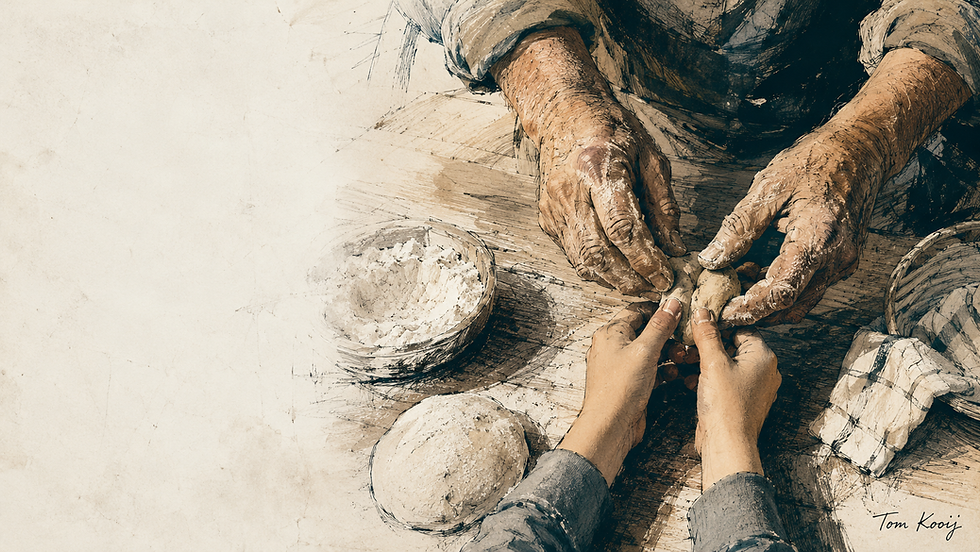
This man is usually in his seventies or eighties, white in the way that is unremarkable in the rooms he has always inhabited, which is to say, completely. Highly likely he is decorated….an Order of Australia perhaps, a directorship at something significant that he tells stories from, a name that appears on buildings or in the acknowledgement sections of annual reports. He has the handshake of someone who has been using it as an instrument for fifty years, firm, dry, held a beat longer than necessary, the grip of a man who decided early that physical presence was part of the performance and has never stopped rehearsing it. The hands themselves are weathered. They have seen business wars, or been present while business wars were conducted, and the skin shows it. It is the kind of weathering that in another context would read as the mark of someone who has done hard physical work, but in this context is the mark of someone who has been fighting for a very long time in rooms with very high ceilings.
He has not lost. That is the central fact about him and the source of everything that follows. He has survived, outlasted and learned, with the patience that comes from decades in these rooms, that proximity to the moment of success is worth more than the risk of creating it. The builder takes the exposure. The man who is strategically present takes the credit and the equity. He has done this enough times that he has stopped experiencing it as a strategy. It has become simply how things work. How they have always worked. How they should work.
I sat across from a man like this not long ago. I won't name him. But the family dynasty is real, the decades of deal-making is real, the name on the letterheads of things that once mattered exist. And what he said to me, with the ease of someone stating a fact so settled it requires no defence, is that the only rule in business worth following is not getting caught. Not building something honest. Not serving the people whose money or trust or labour you are holding. Not getting caught.
He sits on boards, votes on transactions and provides, in the rooms where these things are decided, exactly the kind of credentialed institutional authority that makes ordinary shareholders feel it is probably fine, no need to read the appendix. His name on a letterhead is a form of social proof that has been accumulating compound interest since before most of the people affected by his decisions were born. He is not unusual. He is the avatar of an entire class of men who rose through a system that rewarded opacity and connection and the patience to wait out anyone who objected, and who have been drinking their own kool-aid for so long that they have genuinely reframed a career built on not getting caught as a legacy worth honouring with a medal.
The anthropology of this is not complicated. Status hierarchies are older than any institution ever built. The drive to consolidate position, to close the circle, to ensure that the spoils flow to the people who are already holding them, this is not corporate corruption, it is primate behaviour in expensive clothes. What changes across civilisations and centuries is not the behaviour but the sophistication of the justification for it. The medieval lord had the divine right of kings. The twentieth-century titan had the invisible hand of the market. The contemporary board member has the governance framework, the independent director, the proxy adviser process, the ASX listing rules, all of it constituting an elaborate performance of accountability that is, in practice, primarily a mechanism for ensuring that accountability never actually arrives.
The Emperor has new clothes in every generation. They just update the fabric.
Which brings us to Magellan and Barrenjoey acquisition, currently doing the work of a case study without anyone having to write one. If you want to see the theatre, the performance in the wild, this is the room.
Magellan Financial Group was once one of Australia’s most celebrated active fund managers. At its peak it managed over $100 billion. By late 2025 that number had fallen below $40 billion…..that is more than 60% gone, the result of sustained underperformance, outflows, and a core business in structural decline against the relentless pressure of passive investing. The institution is struggling and everyone can see it.
Right now, it is attempting to acquire Barrenjoey, a five-year-old investment bank, at a valuation higher than Magellan's own market capitalisation. To fund the deal, Magellan issues new shares, diluting every existing shareholder in the process, raising capital from the very people whose position it is weakening to do so. The deal is structured as a placement rather than a scheme of arrangement. This is not accidental or neutral. The effect is to dramatically reduce what needs to be disclosed. Barrenjoey’s financial position, information that any shareholder being asked to approve a billion-dollar transaction might reasonably want, is withheld. The investor presentation, in the words of AFR columnist Joe Aston, “is one tube of glitter away from a school art project”. It is nonetheless sufficient to raise $130 million in an institutional placement the following morning, with sixty percent of the new shares flowing to a single family.
Then, late on the Thursday before the Easter long weekend (just gone), after the brokers have gone home, after the ordinary shareholders have stopped checking their screens, Magellan discloses that Barrenjoey will pay a $45 million pre-completion dividend to its shareholders. The $45 million must be deducted from Barrenjoey’s implied net cash position. The timing of the disclosure is not an oversight. The timing is a decision about what shareholders deserve to know and when they deserve to know it…
Proxy adviser Ownership Matters recommends voting against. A signal, but not one that will move the outcome. The passive index funds get diluted. They can’t vote no — they don’t pay brokerage and the investment banks know it. The board, decorated with some of the most recognisable names in Australian business, smiles for the cameras. The extraordinary meeting is April 10 2026. The machine runs.
It always runs. That is the whole design.
Nobody in that room broke the law. The process was followed. The approvals were sought. The announcements were made, at the timing of the institution’s choosing. And the type of man I described earlier, or someone sufficiently like him that the distinction doesn’t matter, looks at a deal structure like this and calls it fair, because placements serve the people who already have the power, and the people who already have the power are the only people he has ever understood himself to be serving. As long as you don’t get caught….
Discipline without telos. The rigour is real. The direction is gone.
The performance has always depended on two things: enough people willing to absorb the cost of it, and enough darkness to keep the cost invisible. The first is running out. The second just ended.
The tools arrived quietly and did something simple: they made the artefact cheap. Everything the process had been built around producing, the voice-memo, the deck, the analysis, the presentation, suddenly producible in a morning by one person with a clear head. Not perfectly. But well enough that the scaffolding stopped being necessary and started just being visible.
This matters not because of what it does to jobs, but because of what it does to the justification for the performance. If the artefact can be produced in a morning, what was the three weeks actually for? Some of it was real, coordination, alignment, the shared understanding that makes execution possible. That still matters. But some of it, and everyone who has worked inside a large organisation knows exactly what percentage, was theatre. The process justifying the process. Twenty people in a room producing something that one-two clear people with better tools could have done alone, if the institution had trusted them enough to let them…
The theatre required participants willing to pretend that the three weeks was necessary. It required the cannon fodder to keep absorbing the gap between what the institution said it was doing and what it was actually doing. It required the builders in the room to keep nodding at the framework while the Harvard professor explained, from her screen, things they already knew in their bones. And it required (most critically) that there be no alternative. No other way to produce the artefact. No tool that made the scaffolding visible by rendering it optional.
AI is that tool. It doesn’t create the problem of institutional performance. It removes the conditions that made the problem invisible. The emperor’s new clothes were always nothing. The question was whether anyone in the room was willing to say so, and whether saying so was safe. AI changes the second part of that equation by making the nothing demonstrable rather than merely arguable. When one person can do in a morning what the institution said required a team and a quarter, the argument that the team and the quarter were necessary collapses, not politically, but mathematically, and the distinction matters.
The institutional response has been predictable and revealing. The organisations moving fastest are asking the efficiency question, how do we use these tools to do more of what we already do, faster and cheaper? That is the wrong question, and it is the question that does not require examining what you are actually for. The harder question….the one AI is forcing whether institutions ask it or not…is whether what they have been doing was worth doing in the first place? Not whether it can be done more efficiently. Whether it needs to exist?
The university that charges a family’s decade of savings to credential a young person with information they could now access freely….the threat is not to its efficiency. It is to the assumption underneath it, that the credential was the product, not the learning.
The consulting firm that sends in a team to reframe the client’s own knowledge back to them, wrapped in proprietary methodology…the threat is not to the billable hours. It is to the exposure of what the client was actually buying: not insight, but certainty, the psychological permission to do what they already knew they needed to do, conferred by an authority credentialed enough to absorb the blame if it went wrong.
The leadership layer that exists primarily to manage information flow between the people doing the work and the people making the decisions…the threat is not to the role. It is to the question that can no longer be avoided: what judgment are you actually adding?
The institutions that survive what’s coming are not the ones that adopt AI fastest. Speed of adoption is a technology question. What’s coming is an identity question. The ones that survive are the ones that can answer honestly: what are we actually for? Not the mission statement version. Not the investor deck version. The version you would give at two in the morning to someone who genuinely wanted to know.
What are you forming in the people inside this organisation? What are you building that will matter in ten years? What would be lost if you didn’t exist……not the jobs, not the revenue, but the actual thing you do in the world? The institutions that can answer that, which have kept the telos alive underneath the discipline, or are willing to pull up now….have something AI cannot replicate. They have direction. They have the capacity to decide what the tools are for, rather than being shaped by the tools’ logic. The ones that can’t answer it are running on momentum and momentum without direction is just a longer way of describing the same destination.
The leaders who matter in what comes next are not the optimisers. The optimisers are valuable, they are not going away, but optimisation is a tool, and a tool requires someone who knows what it is in service of. The leaders who matter are the ones who never stopped asking what the machine was for. Who sat in the theatre and felt the discomfort of it and didn’t paper over it with another framework. Who understood that the strategy day is not the point, that the credential and the title and the process are not the point, and kept asking, sometimes quietly, sometimes at personal cost, what the point actually was.
Those people have always existed inside institutions. They have often been the most frustrated people in the building, because the performance tends to win in the short term and the short term is what gets measured, but the short term is ending. The conditions that made the performance sustainable…the cannon fodder willing to absorb the gap, the artefact that justified the process, the darkness that made the emperor’s clothes plausible….those conditions are ending. Not all at once, but “gradually, then all at once”.
Back in that conference room in 2016, Rosabeth Moss Kanter finished her session and the screen went dark and someone said “we should go for lunch”. The wisdom in the room, not the Harvard wisdom, the room wisdom, the accumulated knowledge of people who had built things and broken things and rebuilt them, had been present the entire afternoon and had not been asked for once. The document got written anyway. The institution moved on, certain it had done the work.
That is what we have been losing, quietly, for decades. Not capability or intelligence. Not the will to do good work. Just the institutional willingness to trust the people in the room more than the process designed to manage them. The courage to say, in a glass-walled room from atop the Perth city skyline, that the wisdom we need has been sitting here the whole time, and that the document can wait.
The emperor’s new clothes were always nothing. AI is just the child in the crowd and the child, as it turns out, is very good at pattern recognition...
You already knew that. The difference now is that everyone else is about to find out.
—TK


Comments