


Which Ship Must Burn?

Updated: 1 hour ago
On family wealth, the small funeral in every succession, and the difference between courage and arson...
At Gibney in Cottesloe, $38 gives you an experience like no other....a hash brown with caviar.
It is brought to you on an iridescent shell, it is one bite of potato, crème fraîche and caviar and it has been assembled with the seriousness usually reserved for a meeting with a foreign minister (of whom a former one happened to be dining alongside us). Outside, the Indian Ocean breeze comes across Marine Parade, and throughout the venue are white tablecloths and heavy glassware and waiters who know when to arrive and, more importantly, when to disappear. You dress up, most try to match the decor of the restaurant, some stand out, a lady in red walks in. You spend and for a few hours the rest of the world is a distant memory.

The hash brown is absurdly gluttonous by the way, it is also perfect, so much so, we had two each.
The Distance from Hunger
A little over a century earlier a George Kailis, fourteen years old, had left the Greek island of Kastellorizo and had come by ship to Western Australia with very little, and he started, almost in biblical fashion, with a basket of fish and by 1926 it had become a shop in Perth. After that it kept moving. Across the generations and branches of the family, fish became fleets, and fleets became crayfish and prawning and shipbuilding and pearling, and seafood became restaurants, so that generations on another George Kailis could open this grand restaurant facing the same sea the fortune had been hauled out of, and choose, tellingly, not to put the family name above the door but to name the room after the street outside it.
Now caviar sits on fried potato in a pearl shell, it is family history in one bite.
You could call it excess, and you would not be wrong, but luxury, when it is interesting, is not about price, but distance. The potato was poverty food long before anybody thought to sit caviar on top of it, cheap and filling and pulled out of the dirt to keep a family alive through a winter, and here it is presented fried and precise with fish eggs balanced on a pearl shell, so that one mouthful measures how far the potato has travelled from hunger, how far the fish has travelled from the net, how far the shell has travelled from the seabed, and how far the name has travelled from the boy on the boat. This is what people (who have navigated adversity and achieved success) are buying when they commission the houses and the cars and the watches and the wine lists and the caviar balanced on carbohydrates: proof, preferably visible, that a crossing happened.
There is no shame in any of that, in the show or the arriving. The man who once went hungry is allowed to order the thing he used to only dream about, and the woman who read the right-hand column of the menu for twenty years has earned the $500 bottle of Champagne on the night the last debt clears.
Pleasure was never the enemy, and poverty has never been a moral achievement in itself, but arrival creates a problem that departure did not.
The founder knew what the crossing required because necessity stood beside him every morning. The descendants inherit the dining room, but not the hunger that built it, they inherit the pearl, not the irritation that formed it, and this is where family wealth begins to become dangerous...
It is tempting to tell the Kailis story as one of preservation, a family guarding an inheritance across more than a century, except that almost nothing of the original form was preserved. The basket disappeared. The shop stopped being the whole story soon after, the fishing interests were divided and specialised and expanded and changed hands, new branches placed new bets in different industries, so what looks (from outside) like an act of keeping was a century of actually letting go.
See what endured was not the ship, but the willingness to leave one.
Every founder understands this. The difference between deciding and committing is not a subtle choice, whatever the TED talks suggest: a decision says “I will try”, it keeps the door open and the ship in the harbour and the provisions aboard and a story ready about why retreat was only ever prudence. Meanwhile a commitment says “the person I was before this no longer gets a vote”, and then walks down to the water and pours fuel over the hull and sets it alight, so that nobody, the founder least of all, can go on treating the coast as an option. We need to recognise that some crossings cannot be made while you are still turned around, measuring the distance home.
The escape route has a cost. As every time the road hardens, some part of you turns around and calculates the distance back, so that every difficult day becomes a fresh referendum on the enterprise, half your strength going into the work and the other half into deciding whether you still want to be doing it…
Founders often have one brutal advantage, which is there is nowhere worthwhile to go back to. Poverty, migration, disgrace, hunger, war, a failed first life, whatever form the shut door took, it has already removed the negotiation, and so what looks from outside like superior courage is often something colder than that, concentrated necessity wearing courage's clothes.
Most likely, whatever your context is, you are not so cornered. You keep the way back, and that is the trouble, as a decision, which is never forced on you has to be made again every morning. The only way to stop voting on it is to take the option off the table yourself.
That’s why, you burn the ship.
Excellent advice, for one person. It becomes much more complicated the moment a family is aboard.
Excellent Advice, for One Person
Across Perth, almost ninety years after the boy from Kastellorizo stepped off his ship, Phyllis Narula (who was also dining at Gibney that day) could not find childcare she considered good enough for her daughter. So in 2006 she sold the family home in Caversham, moved everybody into a rented duplex, and put the money into a failing childcare centre in East Fremantle. It had ten children enrolled. She kept a part-time job going to make ends meet, drove back and forth across the city, refurbished the place herself, and at one low point had to borrow money to make the staff wages, and there were papers drawn up and ready to sign on the morning she came closest to giving it up.
She did not sign them.
Phyllis and Vijay went on to build Little People's Place into a chain of centres across the city. They drove the buses themselves. They dealt with the toddlers and the parents and the rosters and the regulators and the staff and the daily bodily chaos of other people's small children, which is the least glamorous origin story a fortune can have and, for that reason, one of the more believable ones. In 2021 they sold the eleven-centre metropolitan business to an international operator.
The house, the duplex, the borrowed wages, the centres, and then, on the far side of it all, the trappings that announce a crossing has been made: the better house, the better car, the private school, the front of the plane. The same reckoning the caviar made on the potato: distance, worn now instead of eaten.
It is easy to sneer at visible wealth, especially from a safe seat, and usually a cheap one, but sneering is about the cheapest luxury there is, and the more useful question is what the display means inside the family that bought it.
To a founder the car may not be a car. It may be the house she sold returned to her in another form, or every frightened payroll she ever met, every early-morning start, every warning she overrode, every person who told her to be sensible, all of it polished now until the fear underneath no longer shows. Often in these circumstances, what an outsider reads as vanity can feel, from the inside, like evidence entered before a hostile court. "We were right. It meant something. Look!"
The trouble is that symbols never stay obedient to the people who bought them. The founder looks at the object and sees proof of escape, while the child looking at the same object sees a definition of success to be lived up to, and that is the reversal at the centre of it: one generation buys the car to remember what it survived, and the next grows up inside it, breathing the obligation to keep deserving it.
The first generation burned the ship because security had planted itself between the family and the future, and the second is now told to protect everything because insecurity nearly killed the family the first time round. So what began as courage hardens into identity, and identity into doctrine, and doctrine into a beautifully furnished display room in which nobody is permitted to move the chairs.
So what began as courage hardens into identity, and identity into doctrine, and doctrine into a beautifully furnished display room in which nobody is permitted to move the chairs.
A family can spend fifty years escaping poverty and the next fifty psychologically organised around it.
This is the part almost every succession plan misses, that the trait which creates the wealth is hardly ever the one that preserves a family. A founder survives by concentrating authority, taking the risk, moving before consensus and treating hesitation as a tax. A family survives by doing the opposite, distributing judgment, preserving its options, tolerating dissent and letting somebody other than the founder occasionally turn out to be right.
The founder says, correctly, "I bet everything and made this." What the family eventually hears is, therefore "I may keep betting everything, including you."
These are not the same thing.
A person is entitled to burn their own passage home. What they are not entitled to do is burn the lifeboats of everyone else who never chose the crossing, and once the spouses and the children and the employees and the trusts and the creditors and the family reputation are all aboard the same hull, recklessness does not become noble because the founder calls it conviction. Love does not turn collateral into consent.
The Wrong Ship
There are two ships inside every family fortune and most families, when things begin to go wrong, burn the wrong one.
The first is the boring ship, the one nobody wants photographed: liquidity, low debt, patient capital, legal order, honest accounts, diversified exposure, enough cash to survive a winter that nobody saw coming, and the long-standing family accountant who gets described as boring every year right up until the week everybody needs her. This is the lifeboat. In a boom it looks like timidity, it looks like the money that does nothing, when what it is doing the whole time is buying the family the right to make its next decision on its own terms.
That ship stays.
Whereas the other ship is the one made of identity, and it is harder to see because it does not show up on any balance sheet. It is the founder who has fused with the company so completely that retirement feels like erasure, and the heir who has become a beneficiary and nothing else, whose whole self is the receiving, and the child whose seat at the table depends on continued agreement, and the sacred operating business that cannot be sold because selling it would feel like selling the dead, and the family name that has come to work as both shelter and sentence.
Sometimes the business is the ship, other-times it is only the founder’s place at the helm. The test is which one can be surrendered without asking the family to drown with it.
That is the ship that has to burn, and yet it is the ship families refuse to touch, choosing instead to do the reverse. They spend down the reserve to keep the old identity afloat, they borrow against the future to preserve the founder's monument, they sell the liquid assets to go on feeding a business that no longer deserves the feeding, they call concentration loyalty and silence unity, and by the time the accounts reveal the size of the mistake, the mistake has stopped being financial. It has entered the blood.
I am not describing either the Kailis' or Narula's now. What follows is the composite shape of other rooms I have entered, with identifying details changed, where the money and the family had already begun consuming one another.
The particulars change however, the anatomy of the failure rarely does.
A business grows quickly and is leveraged just as quickly. In the good years, the family commits every reserve to its expansion, having mistaken a spell of good weather for the climate. The founder’s private theory, never spoken aloud, is that those years are not luck or a cycle but evidence of his character. Then conditions turn, as conditions do. The debt becomes heavier than the hull was built to carry, and the bank asks the one question nobody inside the family has been permitted to ask: What is this thing worth without the man who built it?
Around the table sit the people he is meant to protect.
A son is counting his sober nights, knowing the family could survive another relapse and no longer sure that he could.
Another child’s addiction: cocaine to get through the dinner, pills to come down afterwards, whisky to sleep, a bet or two placed from the bathroom while the family discusses stewardship on the far side of the door. The money keeps coming before the consequence lands. It pays for the clinics and the lawyers and the hotel rooms and the emergency flights and one more private chance after the last one. It can make ruin feel almost civilised and give catastrophe room service.
Then there is a marriage that has broken everywhere except in the company records, as neither person can any longer afford to leave the structure that made them rich. The holes get repaired in the doors before the guests arrive. The bruises receive their explanations under expensive lighting. The police get called and then sent away because a scandal now might damage the transaction. The violence is not caused by the money. The money just gives it thicker walls.
The daughter has kept two sets of accounts for years: the tidy one shown to the bank and the ledger underneath it, recording the rehabilitations and the settlements and the missing cash and the frightened grandchildren and the mornings when nobody can find the founder.
An in-law discovers that gratitude is the family’s constitution, and the price of admission is swallowing the insult, lowering the eyes, laughing at the right jokes and never asking who broke the door.
Arranged around them are the adult children, rich enough to be rescued from every consequence and powerless enough never to become responsible for anything, fed and housed and medicated and defended and slowly erased by the thing built to protect them.
What might save them is often embarrassingly simple. Sell the asset. Take the loss. Pay the debt. Walk down the gangway smaller and alive.
But to the founder it is not a sale, it is a death.
He would rather sink as the man who built it than come ashore as someone he does not yet know how to be. So he keeps the family on the burning deck and calls it faith. He recites the old storms, the same victories, the same narrow escapes, as proof that the hull will hold again, but this time the storm is not the danger. The water is already coming in through the seam where the man and the business were welded together.
It is not that he loves the business more than he loves his children. It is worse than that, and stranger. Somewhere inside him the distinction has dissolved, so that saving the business simply is loving the children, obedience simply is gratitude, continuation simply is honour, and every alternative arrives at the door dressed as betrayal.
This is how a virtue becomes a pathology.
What the Money Cannot Hold
James E. Hughes Jr. gave families a language for diagnosing it. Financial capital, he argued, is not the estate but merely its most countable part. There is human capital: the health and character of the people. Intellectual capital: what they know and whether they can go on learning. Social capital: the quality of the relationships and whether the family can still act together when it has to. And spiritual capital: the shared answer, if there is one, to the awkward question of what all the money is for.
It sounds generous. If you have spent enough time around wealth, it reads more like an indictment.
A family can preserve every dollar and impoverish every person expected to live beneath it. It can keep control of the company while the children lose the capacity to choose, pay for an excellent education while punishing every independent thought that education produces, convene family meetings in which no consequential disagreement is survivable, and go on calling the distributions freedom while making sure nobody develops the nerve to live without them. The enterprise survives intact. The properties remain. The foundation keeps its nice stationery. At the centre of it sit a handful of frightened adults, waiting for an old man to die.
Sometimes the control outlives him. He decides that the children in front of him cannot be trusted with it and steps clean over them, leaving the authority and the capital to the grandchildren instead. There are cases where this is necessary, where addiction or incapacity or predation or incompetence does not disappear because someone shares your blood. But sometimes it is not stewardship. Sometimes it is only the founder refusing to loosen his grip, even in death. On paper, the wealth has survived another generation. Inside the family, the decision lands as a final verdict: You were never worthy of the thing I built. The grandchildren inherit the money with that insult still attached, along with parents they have been placed above and a family story that no longer knows how to explain itself. The estate has been preserved. The lineage has been cut through the middle.
The accounts say the wealth made it. The people tell another story.
The Narula story has crossed the first great threshold. Risk became enterprise, and enterprise became capital. The harder inheritance begins after the sale, in the years when the family no longer needs to be brave in the old way, when the duplex has become a story rather than an address and the children know the car in the driveway better than they know the loan that made the payroll. This is the point at which first-generation wealth either matures into stewardship or hardens into a shrine built to its escape.
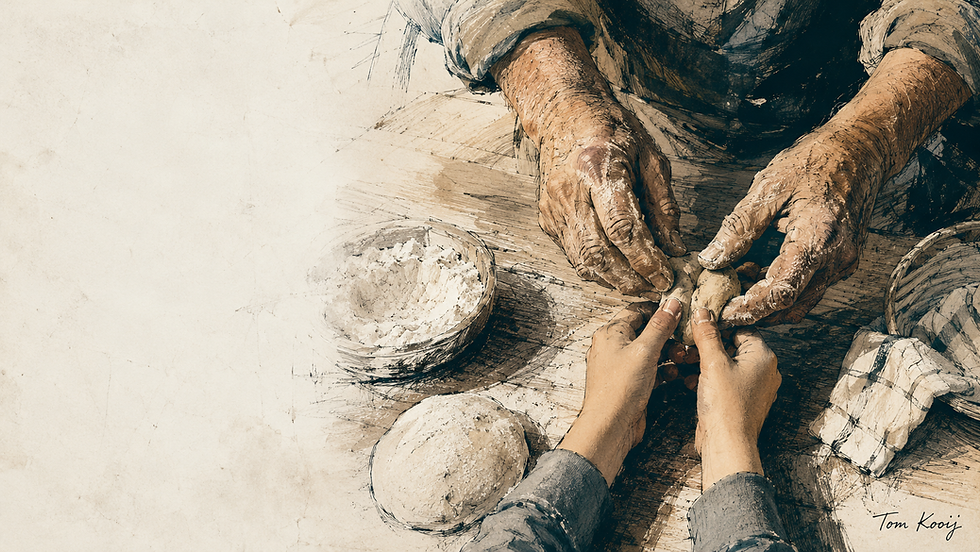
The work after the fortune is not to make the children reenact that escape. They need to know about the duplex and the loan, including the fear carried through both, but they cannot be asked to live inside them forever. They should know what the name cost without being told that gratitude means becoming a replica of the person who paid for it. Otherwise the founder has not handed down a history. He has built a museum and appointed his children curators.
Financial capital is the easiest of the capitals to count, which is probably why families keep mistaking it for the whole. The work is not merely to preserve the pile. It is to enlarge the lives capable of holding it. That turns the governing question inside out. It stops being How do we keep the assets together? and becomes What kind of people must we become to hold this much power without being held by it?
Governance can create a forum, distinguish roles, limit authority and force information into the open. What it cannot do is confer adulthood. No constitution has made two siblings love one another. No distribution policy has created a vocation out of nothing. No family retreat has turned resentment into trust, and no committee charter I have seen has manufactured an ounce of courage.
Founders are not the only ones keeping a boat tied to the jetty. An inheritance can become an escape route wearing the costume of security, so that a difficult job can be left the moment it turns difficult, a business can be started without suffering the humiliations that make a market instructive, a relationship can be abandoned without immediate consequence, and a failure can be absorbed so painlessly that it never hardens into knowledge.
The danger is not comfort. Misery is not morally superior to comfort, and deprivation makes a terrible family curriculum. The danger is a life in which consequence has been removed so thoroughly and so kindly that commitment becomes optional.
The heir can always return to the harbour, and so every hard season turns into a negotiation, every vocation stays provisional, every relationship keeps one eye on the exit, and every identity gets tried on without ever being inhabited. The family is sure it has given the child freedom. What it may have given them is an emergency exit out of becoming a person.
This is why equal distributions produce unequal lives. One person receives the capital and it becomes equipment. Another receives the same capital and it becomes an anaesthetic. One uses the reserve to take a considered risk; the other uses it, year after year, to avoid the verdicts by which adults discover their limits. The document can never tell them apart. Only the family can.
To inherit well, the heir has a ship of their own to burn. Not the assets. Not necessarily the relationships, though in some cases even that becomes unavoidable. What has to burn is the role of heir once it has swallowed everything else, once being the one who receives is the whole of who you are. The task is to become someone whose life would keep its shape if the money vanished overnight, someone who has met work that does not care about the surname, people who cannot be bought into agreement, limits that do not bend because money is applied to them, and commitments that stay binding long after the enthusiasm has drained away.
None of this means reenacting the founder’s suffering. Trauma is not a tradition. Selling the children’s home may have made a fortune the first time, but ritual homelessness is not a succession plan. The next generation does not need to inherit their wound. It needs to inherit the capacity to look straight at reality without flinching.
Name It Honestly
That capacity begins with an unsentimental act: stripping the inherited thing of its glamour and naming it honestly.
Marcus Aurelius was the most powerful man in the known world and spent much of his private writing reducing power to its ingredients, which, for an emperor, is a hell of a thing to keep putting in your notebook.
The imperial purple, he kept reminding himself, was sheep’s wool stained with the blood of a shellfish. Falernian wine was grape juice. Roast meat was a dead animal. Sex, with the poetry stripped off it, was friction and a little fluid. He was not being a puritan. He was trying to break the spell of surfaces, to name a thing before his appetite could name it for him.
Now back to the caviar is fish eggs. The hash brown is potato. A pearl begins as an irritation. The Lamborghini is metal, leather, petroleum and a story. A company is contracts, habits, people and cash flows. A family name is only a sound made in the mouth, and one day nobody living will remember the founder’s voice.
None of this is an argument against ordering the caviar, I would order it again. The point is to enjoy a beautiful thing without kneeling to it...
Marcus kept another, more offensive equality close at hand. Alexander the Great and the man who drove his mule both died, he noted, and the same thing happened to them both. The empire did not negotiate an exemption. Conqueror and mule driver went into the same dark, and neither took any luggage.
That is the cold water Stoicism throws over family wealth.
You are going to lose it.
Perhaps not now. Perhaps the lawyers are excellent, the portfolio disciplined, the grandchildren unusually sensible. But in the long arithmetic, every asset leaves your hands. The company will be sold or divided or transformed or ruined or made irrelevant. Strangers will live in the house. The silver will end up in somebody else’s drawer. Even the family name will eventually be mispronounced, without malice, by a person who has no idea it was supposed to matter.
Memento mori was never advice to abandon stewardship. If anything, it is the reason to practise stewardship honestly. If ownership is temporary, the question was never whether you could make the estate permanent, because you cannot. The only question left is what your period of custody did to the people standing around it. Did the money enlarge them or make them smaller? Did it give them room to act or teach them only how to wait? Could the truth be spoken before the crisis arrived and made speech irrelevant? Did you leave behind capable human beings, or only well-defended assets surrounded by dependants?
The Stoic does not burn the ship for the theatre of it. Irreversibility is not courage because it photographs well. The real work is quieter than that, and duller. You examine what is within your command and release the rest. You rehearse the loss before it arrives. You refuse, day after day, to kneel to your own appetite or fear. Then you proceed anyway.
Keep the cash, if the cash is what keeps the family free. Keep the assets too, where they still serve rather than command. But let the mythology go. Protect the people even when protecting them means ending the roles that are deforming them. Do not manufacture irreversibility where none is required. But when a role, a company, an office or an inherited family story can survive only by consuming the human beings inside it, stop calling one more year prudence.
Funerals in the Daylight
The test is unpleasant, which is probably why families keep postponing it. If the business failed tomorrow, who would we be? If the assets halved overnight, would the siblings still be speaking by the end of the month? If the founder died tonight, in his sleep, does a single person know where the debt sits, who holds authority and whether open disagreement is still permitted without exile? And if the name came off the door, what work would we still think worth doing?
The answers feel like funerals because they are.
The founder has to bury the belief that his indispensability is the same as his worth. The successor has to bury the quieter hope of receiving authority without becoming answerable for its use. The family may have to bury a company, an office, a dividend, a public identity, the old order around the table, perhaps even the fantasy that harmony was ever supposed to mean nobody leaves.
The families that endure hold these funerals in daylight, before a crisis hits them in the dark. They name the thing that is ending. They let the people who loved it grieve without handing that grief a veto over what happens next. They guard the reserve, and then they transfer the one thing harder to pass on than the identity: the practice of seeing reality, naming its price, paying it and proceeding anyway.
That is the part of generational wealth no compound return can express. It is not capital extended through time. It is the ability of a family to change without losing itself in the change.
Only the Boats Kept Changing
The Kailis history matters not because every move was clean. Family histories are never that tidy. They branch and divide. Assets get split, businesses get sold, siblings choose differently, and one generation’s enterprise becomes the next generation’s raw material, which is the point.
The basket never needed to be embalmed for the impulse behind it to survive. The sea stayed where it was. Only the boats kept changing. Fish became fleets, and then pearls, and then jewellery, and then hospitality, because what was being inherited was never only an object. It was a way of meeting the world: looking hard at what is in front of you, refusing to be sentimental about it, working out what it might become in other hands, and declining to ask the last version of the family for permission before building the next.
A century is long enough to see the difference. At one end of the Kailis story is a boy selling fish from a basket. At the other is a $38 hash brown at Gibney, fried potato carrying caviar on a pearl shell, looking out over the same water from which so much of the family fortune was hauled. Between them is not a pristine act of preservation but a series of departures, each generation deciding that the vessel which brought the family this far might not be the one capable of carrying it any further.
Potato. Fish eggs. Craft. Memory. A little theatre at the end of a very long crossing.
Not proof the family made it. Only proof that, for one evening, it is here.
And underneath it, the question every generation eventually inherits:
Which ship must burn?
--TK
For the Family Table
Five questions to ask before succession becomes a crisis:
What is the money for? Not what is it invested in, or how will it be preserved, but what human good is it meant to make possible, and for whom?
If the financial capital vanished tomorrow, what would remain? What strength of character, accumulated knowledge, trust between people and common purpose have we built that no market can take away?
Is each person becoming more capable of authoring a meaningful life because of this wealth, or less? Are we producing human beings who can choose, work, fail, recover and contribute, or beneficiaries trained chiefly to wait?
Would the rising generation still choose to belong to this family project if money could neither reward their loyalty nor punish their departure? Can they disagree, choose another vocation or leave the operating business without being treated as though they have left the family?
What are we preserving that has begun to diminish the people preserving it? Which company, role, entitlement, grievance or family mythology must be allowed to end so that the family itself can continue to flourish?
These are not questions to begin asking in the middle of a fire.


Comments